Reflecting in the Season When F1 Reaches Its Final Stage — The Appeal of the MINI-Z Formula × Toyota F1
As the mornings and evenings grow colder and even the air in the pit lane feels clearer, it’s the time of year when Formula 1 enters its final stages and the battle for the championship reaches its climax.
This time, I’d like to introduce the “MINI-Z Formula,” a model that remains extremely popular despite having been discontinued. Over the years, many teams such as Ferrari, McLaren, and Williams-BMW have been modeled, but among them, one of the most sought-after and rare versions is the Toyota F1 (Toyota Racing / Panasonic Toyota Racing).
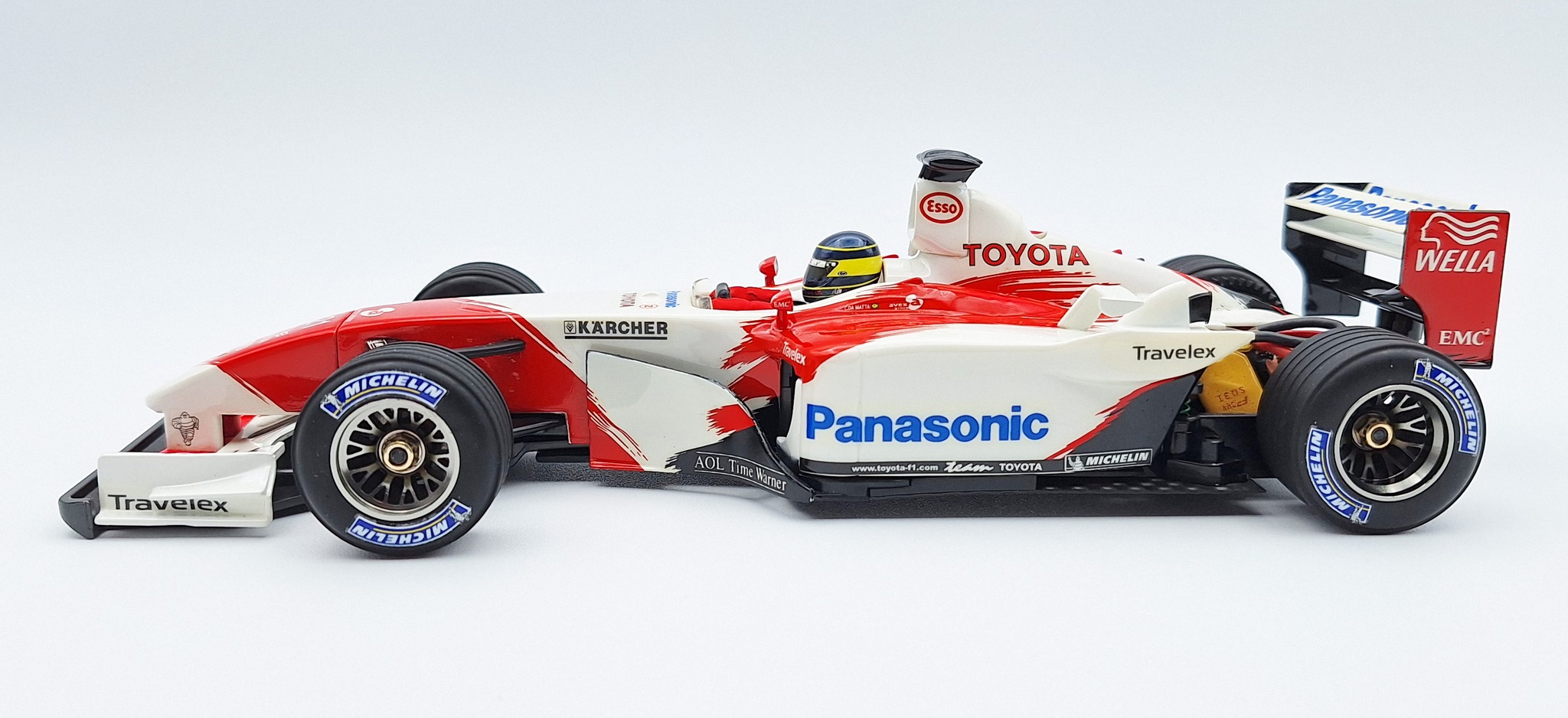
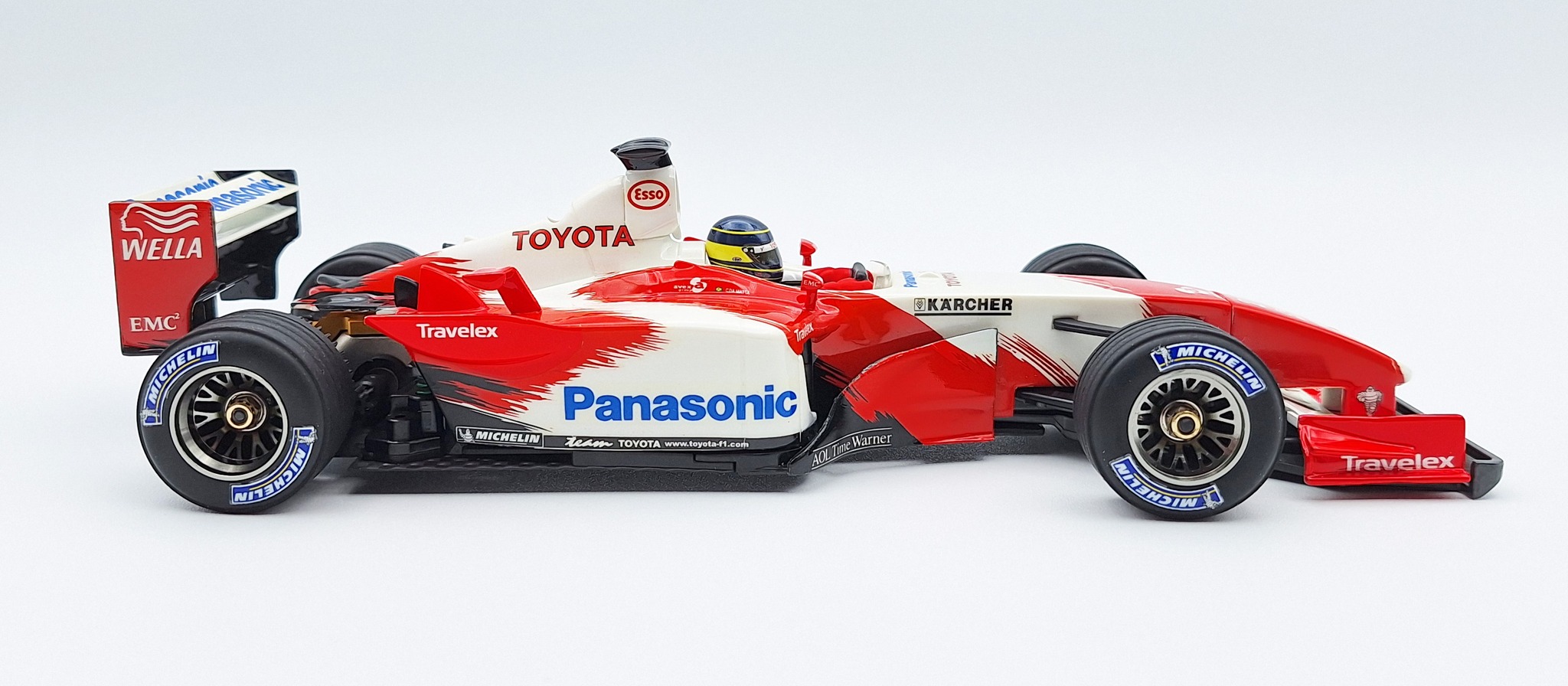
When you think of Toyota F1, the iconic red splash pattern on a white base immediately comes to mind. It’s simple yet unmistakably Toyota—a design that stands out even among F1 machines. The large blue “Panasonic” logo on the rear wing is another defining symbol that cannot be left out when talking about Toyota’s F1 car.
The flowing red-and-white splash livery accented with the blue Panasonic logo creates a striking color contrast. Even in MINI-Z scale, the reproduction of this contrast is excellent, earning praise like “It’s small but looks just like the real thing” and “It instantly brings back the image of the actual car.”
【 History of the Toyota F1 Team 】
Toyota competed in Formula 1 from 2002 to 2009—about eight years—as a full “works team,” building everything from the engine to the chassis and running the team entirely in-house.
Backed by top-level experience in Le Mans and the WRC, Toyota had a clear vision: “Next, become the best in the world in F1.” They established a massive F1 facility in Cologne, Germany, and from their debut in 2002, the operation was said to involve the largest financial investment in the sport.
【 Toyota F1 Team Results 】
2002: 10th in Constructors’ Championship — scored points in their debut year.
2003: 8th — a turning point where team performance began to rise.
2004: 8th — struggled due to an aero package and tires that didn’t match well.
2005: 4th — a major breakthrough with consistently strong results; the TF105 was highly rated.
2006: 6th — difficulties with the Michelin tire package.
2007: 6th — the TF107 failed to meet expectations.
2008: 5th — regained competitiveness and maintained steady mid-to-front-runner pace.
2009: 5th — adapted well to major regulation changes, started the season strong, and came close to their first win. The 1–2 in qualifying at the Bahrain GP’s fourth round raised huge expectations.
In 2008, the global financial crisis forced companies worldwide to reassess their management strategies. Automakers were hit especially hard, and Toyota projected what would have been the first deficit in its history. As a result, after the 2009 season, the company made the painful decision to withdraw from F1.
That year, Kamui Kobayashi made a late-season debut and delivered incredibly impressive performances. I personally believed he would drive for Toyota in 2010, so the withdrawal was extremely disappointing.
Toyota F1 is often referred to as one of the “strongest teams never to win,” having secured poles and podiums yet falling just short of victory. Still, their technical ability was exceptional and laid important foundations for today’s WEC success and the GR brand.
Why MINI-Z Formula Remains Popular
The MINI-Z Formula has been discontinued, yet it continues to enjoy strong support from the second-hand market, collectors, and active drivers.
Its popularity comes from the stable handling of its long wheelbase and its slim formula-style body, which together deliver a uniquely sharp cornering feel. It offers a driving experience totally different from touring-style MINI-Z models, making it one of the most enjoyable MINI-Z cars to run.
The body fidelity is also excellent, with sponsor logos from the era reproduced with great accuracy.
Many users who get hooked on MINI-Z Formula tend to stay with it, and some long-established hobby shops still run dedicated Formula classes. Because production has ended, well-preserved chassis and unopened kits can now fetch high prices.
Its appeal lies in the combination of palm-sized yet authentic F1 dynamics, body designs filled with real-world history, the unique handling of a purpose-built chassis, and the irresistible lineup choices that excite F1 fans.
Among these, Toyota F1 stands out thanks to the drama of the near-victory in 2009 and its beautifully clean red-and-white livery. Its popularity persists not simply because it is an RC car, but because it feels like “driving your memories.”
I sincerely look forward to the day Kyosho announces a revival or re-release of the MINI-Z Formula.